
‘Talking Trash,” a new show about hidden systems of waste
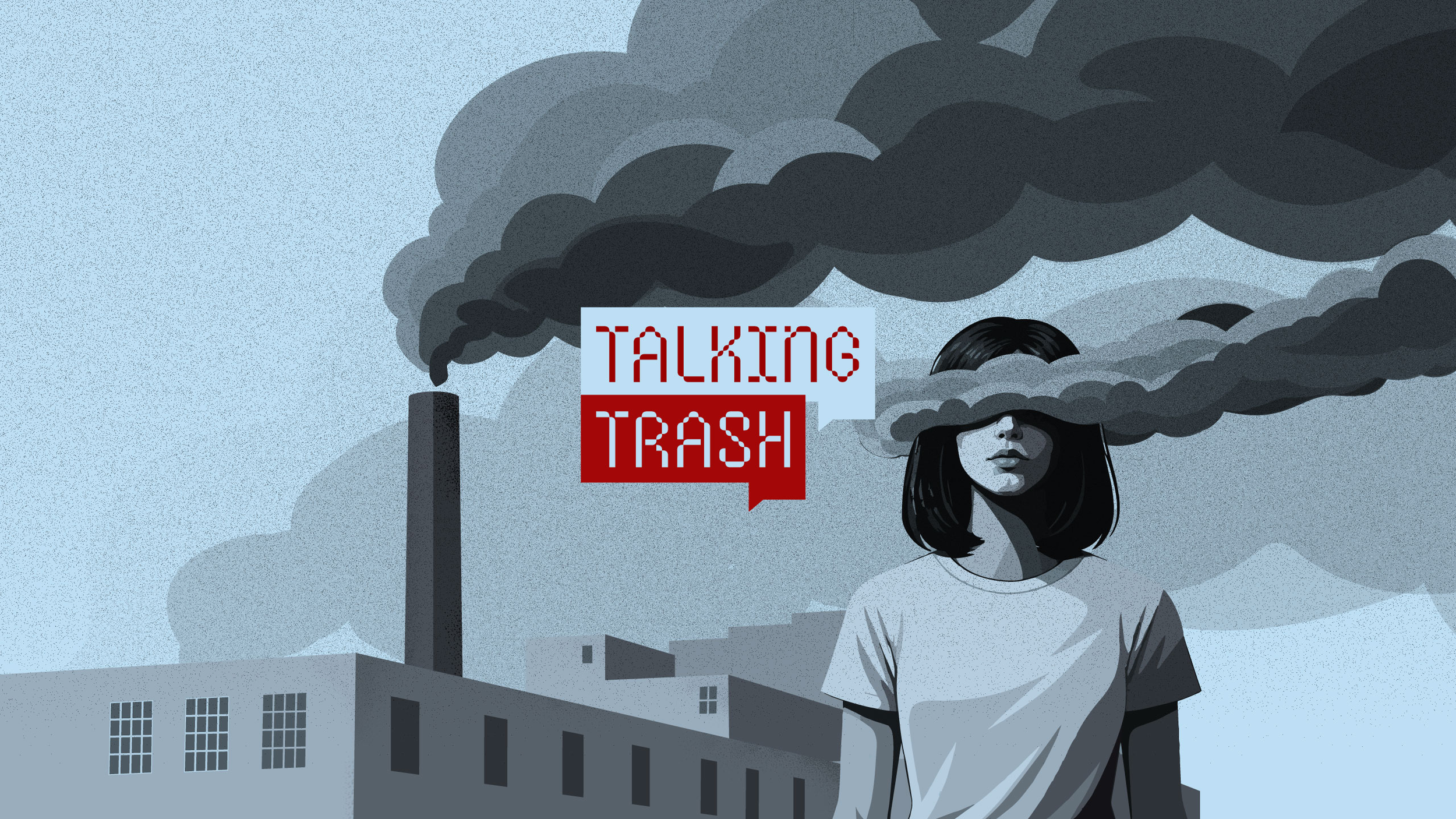
Cover art for “Talking Trash”
A new show about the real waste crisis happening upstream from your trash bin
As a freelance journalist and essayist, I've spent over a decade writing about waste. Not debates over plastic vs. paper straws, or how to best sort household recyclables. But bigger questions of planetary waste and pollution: space junk, ocean plastic, abandoned skyscrapers, and cleanup tech myths. Before I wrote these stories, I came up in the world of corporate marketing and business school – seeing firsthand how the costs of economic growth are pushed onto everyone else.
Upstream from your household bin is where the real waste crisis is happening, and it’s staggering in scale.
What media gets wrong about waste and pollution
Household waste accounts for a mere 3-5% of a country's total waste output. The remaining 95% or more comes from industry — mines, factories, farms, chemical plants, and supply chains. The EPA publishes detailed data on household waste every year, but there is no equivalent federal reporting requirement for nonhazardous industrial waste.
And when it comes to our personal trash, consumers don’t really “produce” waste as much as manage it. As discard studies scholars Max Liboiron and Josh Lepawsky explain, we're “only a waypoint for objects that have been designed to be wasted” long before they reached us.
Yet, the cultural conversation around waste has exploded in the opposite direction. Waste-related media coverage has grown roughly 10x since 2016, driven by Netflix documentaries, TikTok influencers, and the rise of zero-waste lifestyle content. Almost all of it focuses on individual consumer behavior: what you buy, what you throw away, how guilty you should feel about it. A massive public conversation about the smallest piece of the problem.
That gap — between where the conversation is and where the crisis actually lives — is why I'm making TALKING TRASH.
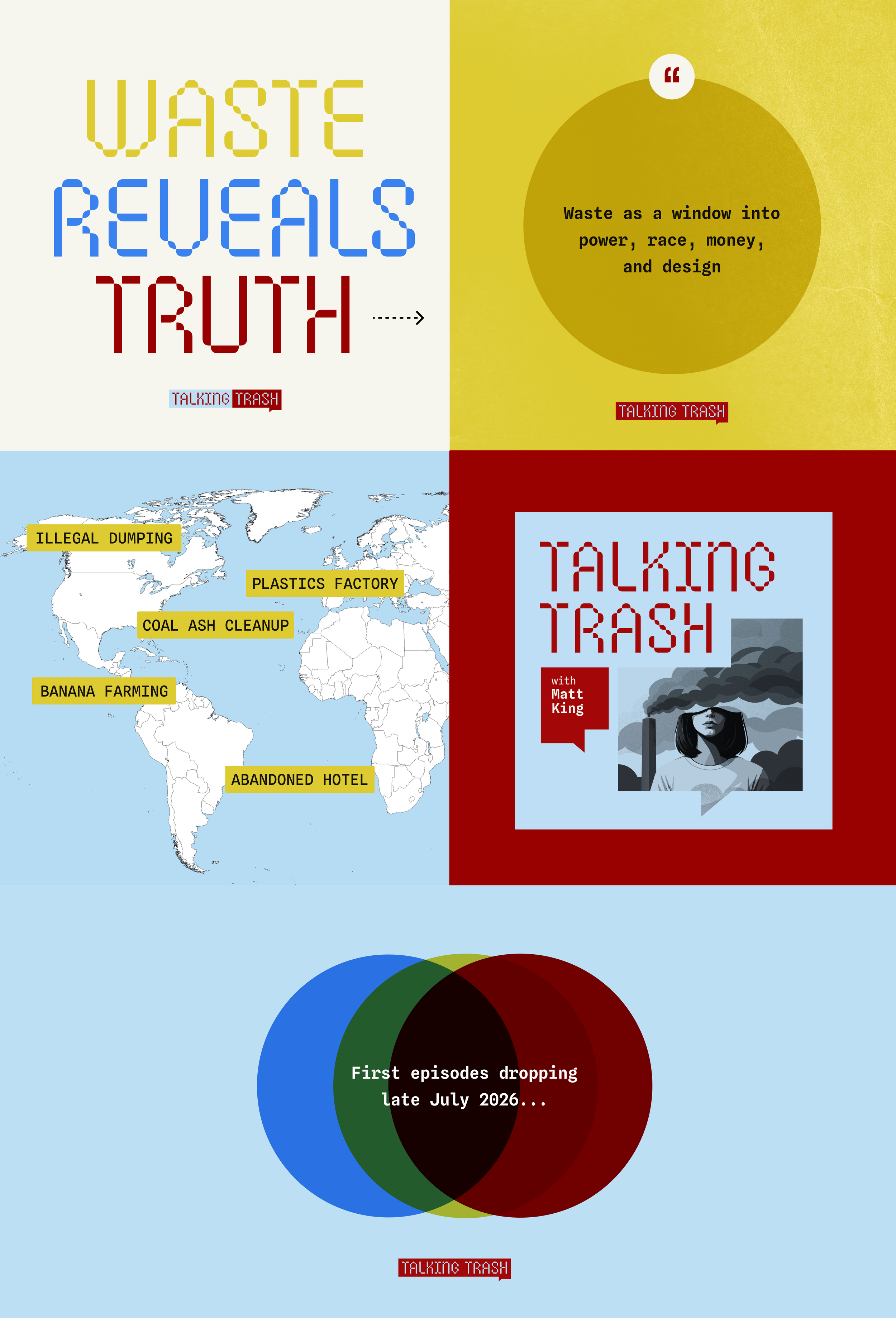
Teaser designs for Talking Trash | Art Director: Frances Miller
The biggest messes industry has left behind
TALKING TRASH is a new independent podcast that follows waste upstream to the systems of power, money, race, and design it exposes along the way. Each episode features a conversation with a different author, filmmaker, scientist, or artist who is unearthing what industry has buried, dumped, or designed out of sight. It's not a lifestyle show. Nobody's going to guilt you into composting harder. The show takes no sponsors and no industry money.
Our first episodes span five countries and four continents. From the biggest industrial disasters few have heard of to forever chemicals with a half-life of a million years, from a poet in a plastic factory to the toxic legacy of Caribbean banana farming.
These stories may seem wildly different on the surface, but they share a through-line: waste reveals truth. Follow it to the source and you’ll uncover the power structures that shape how we live — which is the first step to asking the right questions and taking action.
Where to listen and follow
New episodes drop every other Tuesday, starting the last week of July. You can subscribe wherever you listen to podcasts. Follow the show on social media for updates, episode notes, and further reading:
Listen: Apple Podcasts, Spotify, YouTube
Follow:
Instagram: @_talkingtrashpod
TikTok: @talkingtrashpod
YouTube: @talkingtrashpod
